

The Third Interlude
An Excerpt from "The Memoirs of Patrick Midnight"

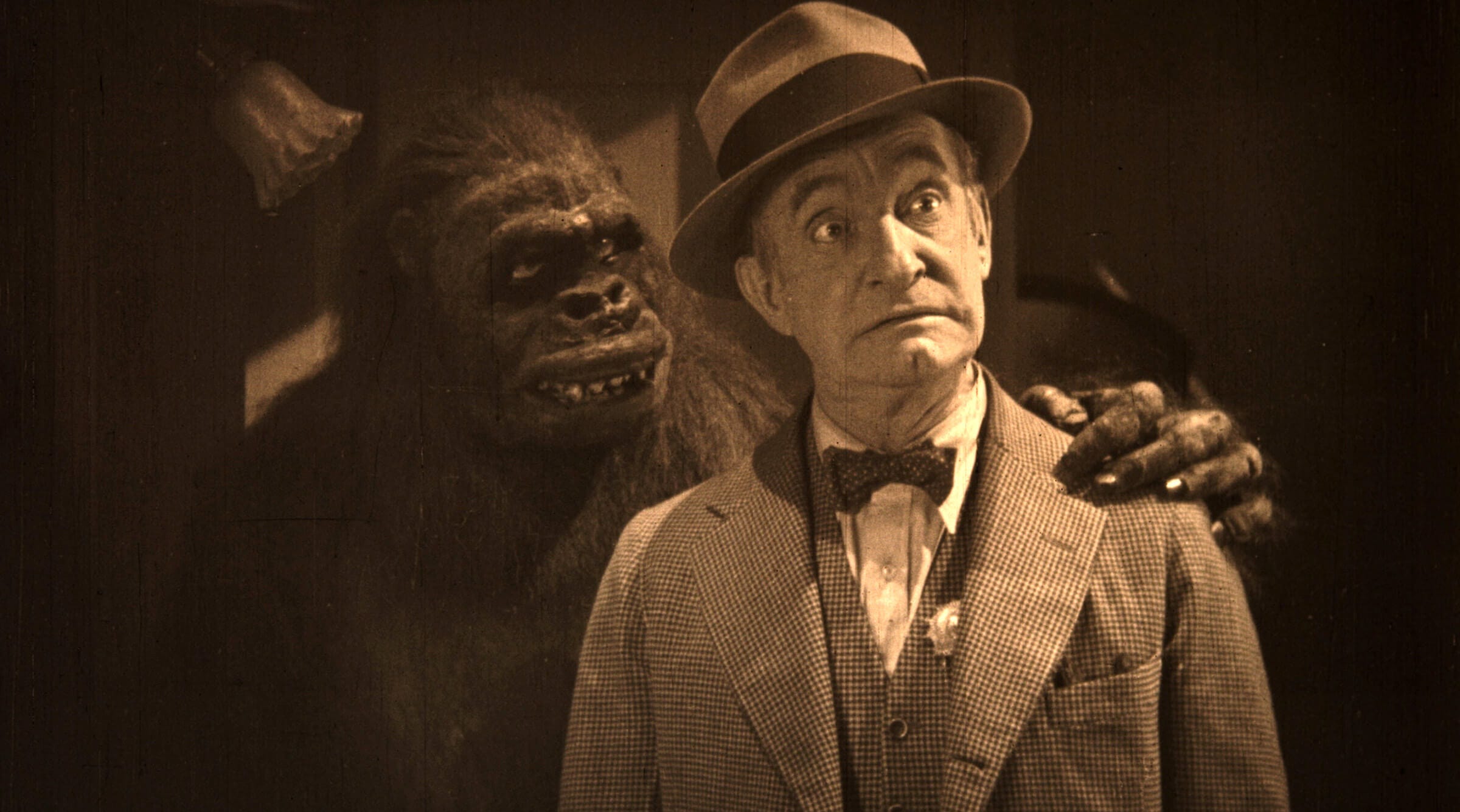
Here it is — the final excerpt for the forthcoming MEMOIRS OF PATRICK MIDNIGHT. If you like this work, then please subscribe to NEMESIS for their continuing publication of the latest Midnight & Blackstone novellette. Also, BOLO for the book when it finally drops.
Also, to truly understand this interlude, please read “The Horror of Hollywoodland” first.
The writer sipped his glass of Scotch and complimented Patrick Midnight on his fine selection of whiskeys.
“Would you believe that most of this stuff was my father’s?” Midnight said.
The other man, who was short and slender, with heavily hooded eyes that made him look permanently sleepy, expressed surprise. “Really? Well, a toast to old man Midnight then.”
The younger Midnight finished his glass in one quick swallow. “Yes, to the late, great Horace Walpole Midnight.”
“Oh, I’m sorry. I didn’t know that he had passed.”
“It’s quite alright, Mr. Wandrei. My father has been dead for five years now.”
“An illness?”
“No. He was not sick.”
“An accident?”
Midnight looked down at the carpet beneath his feet. He kicked at a few imaginary clouds of dust before answering. “If you don’t mind, I’d prefer not to talk about that.”
Wandrei apologized. He reached out towards a side table and picked up a notepad. From an inner jacket pocket, he produced a pencil that had recently been chewed by either a canine or its human owner.
“I guess we can now talk about your case, Mr. Midnight.”
“A good idea,” Midnight said. Three weeks prior, he had contacted Mr. Wandrei’s publisher in New York. That missive had been a simple fan letter expressing appreciation for Wandrei’s detective character, I.V. Frost. Ever since March, when the Roosevelt administration dropped the hammer on the Society of Gentlemen Geographers under the lie that the group was a front for Italian and German interests, Midnight had found that he had a lot of free time on his hands. There were no more missions, no more meetings with Stanley Hopkins or Major Steptoe, and no more traveling. He therefore sequestered himself at home and read. He read a lot, especially the many true-crime and detective pulp magazines he bought in bulk from a pharmacist in Providence.
After Wandrei personally answered Midnight’s letter, the former special agent hit upon an idea: What about hiring Mr. Wandrei as a ghost writer? Midnight figured that he could make some much-needed money selling his memoirs to Clues or Black Mask as slightly fictionalized versions of real events. Wandrei proved receptive to the idea, and thus he found himself, with pencil in hand, ready to be the Doctor Watson to Patrick Midnight’s Sherlock Holmes.
“So,” Midnight said, “I think a good place to start would be my brief tangle with the Hollywood Gorilla Man. That was a clear-cut case. No mumbo-jumbo.”
“That’s good,” Wandrei said while sitting up a little in his leather chair. “We can save the spookier stuff for Weird Tales after we get the first few stories off the ground.”
“You’ve got a real mind for the business, Mr. Wandrei.”
“I’ve been earning my milk for years in this game. A lot of fellows think too much about the art aspect, almost like they’re Rembrandt without the paint. Me? I know that you can write the world’s best story, but if nobody buys it, then nobody reads it.”
“Perfectly logical to me,” Midnight said. “Back to our ape man. It was the summer of 1931. I had just gotten back from a mission in Europe. Nothing particularly fancy, mind you, but I still had earned my required RnR. I did not get to enjoy it, however, as I received an unexpected phone call on the afternoon following the usual debrief at the New York office.”
“Who was on the phone?”
Midnight smiled. He struck up a Lucky Strike. He coughed a few times. A tight household economy had forced him to start smoking a cheaper brand, and he was still not used to the harsher flavor of American cigarettes. He dearly missed his Gauloises.
“A friend by the name of Tod Garrett.”
“What? The movie director?”
“The very same one. He was a wannabe screenwriter when I first met him at Draco Studios in 1929. He got his breakthrough in ’30. By ’31, he was the most in-demand mystery director in California. He was halfway through making The Tell-Tale Heart when he dropped everything and called me. He said something about an attempted murder.”
Wandrei cocked an eyebrow and made furious notes in his notepad.
“Tod gave me most of the scoop over the phone, but it wasn’t until I went out west that I saw just how bad the case was. A string of girls—all butterfly types, you know. Three beautiful women who wanted to make it in the movies, but somewhere along the way had fallen in love with the party scene. I forget most of their names now, but the last victim was Mildred Bannerman.” Midnight spelled the surname for Wandrei.
“Okay. B-A-N-N-E-R-M-A-N. Got it.”
“Right. Poor little Mildred was a farm girl from Missouri who wanted to marry Valentino. She stole some money from her father and rode the rails until discovering to her horror that Rudy was already dead. She stuck around in Hollywood anyway. Became a nudie cutie for aspiring sculptors and painters. Earned himself a reputation as someone on the loose side, if you catch my meaning.”
Wandrei pinched his forefinger and thumb together in the universal symbol for approval.
“Mildred did get some acting credits. It was all background extra stuff until my pal Tod decided to hire her for a supporting part in his Poe production. She only enjoyed one day of stardom before someone murdered her in her own bed.”
“Okay, Mr. Midnight. Here’s the part where you fill me in on all the details. Please don’t skimp or throw something away as useless. Give me everything.”
“Alright. The crime occurred at precisely 10:21 P.M. Someone unknown and unseen entered 713 N Bonnie Brae St. via an open window and strangled Mildred Bannerman to death. The coroner told me later that the young woman’s windpipe was practically crushed into powder.”
“Did anyone hear anything?” Wandrei asked.
“Nobody. Not even Mildred’s roommate, who was still awake in an adjoining bedroom.”
“Fascinating. Any suspects?”
“I’ll get to that in a second. First, let me fill you in on what happened the night I arrived in Los Angeles. After meeting with an apoplectic Tod, who had Universal already breathing down his neck about production costs, I took myself out to dinner at the Brown Derby before retiring to Tod’s bungalow, where he had a guest room all made up for me. I desperately wanted sleep that night after days spent on an uncomfortable train, but events denied me that pleasure.”
“What happened?”
“The killer struck again. This time, the victim lived on the other side of Echo Park. Esther Miller. She, too, was a member of the cast for The Tell-Tale Heart. Fortunately for her, she woke up just in time to see the creep climbing through her window. Her scream woke up the whole neighborhood, causing the strangler to flee into the night.”
“What did she see?” Wandrei asked. “Did she give a description of the killer?”
“Sure. She said it was a gorilla.”
“A gorilla?!”
“Yeah. A big, black primate from the steamy jungles of the Congo. All muscles and bad attitude.”
Wandrei held up a hand. “Wait a minute, Midnight. A real gorilla?”
“I’ll get to that part. Tod woke me up to tell me about the murder attempt. We drove out to Miller’s apartment in Tod’s new Opel. The crime occurred during that one time of the night when there’s no traffic in the city, so we made it in seconds. I found Esther already in a state. She was crying and blathering on like someone in the grips of hysteria. Couldn’t blame her. It’s not every day that a wild animal tries to sneak into your house in order to murder you.”
Wandrei snickered before pouring himself a new glass.
“I asked her to relive the scenario again for me, and then I went about exploring the scene. Tod, Reverend Blackstone, and I searched every inch of that room looking for clues. We were on the point of giving up when I found the smoking gun.”
“Okay. Hold up a minute,” Wandrei said. “First of all, who is ‘Reverend Blackstone.’”
Midnight laughed out loud. “I don’t think you would believe me if I told you, Mr. Wandrei.”
“You forget that I write ghost stories and stories about werewolves,” the writer said as a riposte.
“Fair enough. Still, let’s just say that Blackstone is another friend of mine who has been beside me for most of my cases. I would introduce him to you, but he’s away at the moment. Today is the anniversary of the Great Swamp Fight. That event holds a special place in his heart.”
“I see. My other question then concerns what you found in Ms. Miller’s room.”
“Hair. I found coarse, dark-colored hair on the windowsill.”
Wandrei’s eyes grew big, and his jaw hung open. “So, it was a gorilla? Was it a trained killer like in Poe’s ‘Murders in the Rue Morgue?’”
Midnight shook his head. “I took the hair back to Tod’s house. I knew that the little oddball kept a microscope as part of his interest in criminology. I used it to my advantage, and upon examining the single hair, I discovered something conclusive—the hair did not belong to an ape at all.”
“Did it belong to another animal? A chimpanzee, maybe?”
“No, it did not belong to any animal but a stage gorilla. It was hair from a costume. Fake. Artificial.”
Wandrei took a heavy pull from his Scotch. “Why would a killer dress up like a gorilla?”
“Normally, that would be a question for Mr. Freud, but I can explain. You recall how I met Tod at Draco Studios, right?”
“Yes.”
“Well, before it closed its doors, Draco Studios was silently owned by the Society. The original goal was for the lot to become a kind of money-laundering operation in which Society loot would be laundered through movie productions. President Roosevelt is half right when he calls the Society a ‘den of criminals.’ A huge portion of our activities was extralegal, but everything was for the greater good of the United States and its allies. Do you believe that?”
“Sure,” Wandrei said.
“Good. Anyway. Draco was left too independent for too long. Graf Von Eberling…he was the fellow most interested in using the studio to finance his pet projects in East Prussia…left one of his war buddies in charge. That man proved to be a wastrel, and by ’29, Draco was a hotbed of drug creeps, flesh peddlers, and other unsavory types.”
Wandrei asked Midnight to pause a moment so he could write everything down. When he was finished, he made the okay sign again.
“One of the worst of the Draco bunch was an actor and stuntman named Al Contreras. A Mex from Tijuana, Contreras was a pimp and procurer who used Draco as a base of operations. He hosted sex parties on the back lots that got really, really wild. One of these parties ended in murder. That was the case where I met Tod and broke up a Tijuana-to-Chinatown sleaze ring that also included a few black magicians in the mix.”
Wandrei held up a finger. “I remember that. You sent me that manuscript to read on the train ride up. ‘The Horror of Hollywoodland.’”
“Correct.”
“Wait one second! Contreras…Al Contreras. Wasn’t he involved in that case too?”
“Yep. Al played the gorilla.”
Wandrei’s eyes bulged again. “Are you telling me that Contreras kept his gorilla get-up so that he could murder aspiring starlets?”
“Not just any starlets, Mr. Wandrei. Every single girl, even the first two who I have sadly forgotten about, had some kind of connection to Tod and his Poe picture.”
“So, it was revenge?”
“That was the immediate factor. Al hated Tod, and he hated me too, for playing a role in getting him blacklisted from the movie colony. After the downfall of Draco, which the Los Angeles press ate up like candy, Al had to flee back across the border to avoid the heat. When he appeared two years later, his mind was fully gone. Heroin and too much tequila had turned the man into a revenant—the mindless, shambling dead. His only reason for continuing was revenge, and in his muddled brain, he figured that killing those girls would eventually lead to Universal killing off Tod’s picture. He almost succeeded too.”
“Fascinating,” Wandrei said. “How did all of this end?”
“A bit anticlimactic. Tod waited a few days before putting an announcement in one of the trade journals. MARGUERITE PLYMOUTH NAMED AS NEW STAR OF POE PICTURE. Tod has a way with words, and that announcement read like the real McCoy. That was the goal, of course. We set a trap for Contreras and even gave him directions.”
“I suppose Marguerite Plymouth is not a real person.”
“Oh, no. She’s very real and still very much alive. Three years ago, she lived at 857 N Iliff Street. A nice, comfortable little place in Pacific Palisades. Tod made sure that the announcement mentioned that. We figured that Contreras wouldn’t waste time striking again, and we were right. He smashed through a downstairs window that same night, but instead of finding petite Mrs. Plymouth, he discovered to his horror that I was waiting for him.”
“What did you do?”
Midnight shrugged his shoulders. “Why, I shot him, of course. I think I fired four times. I used a .25 automatic. A Browning.” Midnight produced the gun by simply reaching into his pants pocket. He handed the weapon to Wandrei for inspection.
“Amazing.”
“Every shot landed,” Midnight continued. “The killing blow was the one that caught the gorilla man in the mouth. No more roaring for the king of the jungle,” he quipped. Wandrei laughed too.
“An incredible tale, Mr. Midnight.”
“You have enough for a marketable yarn?”
“I think so,” Wandrei said. “I’ll change a lot of the particulars to keep all the names safe.”
“Of course. Even though the Hollywood Gorilla Man murders did not make the papers out here, it’s best to muddy up the waters a bit so the Californians don’t get upset.”
“Yes, sir,” Wandrei said. “I’ll go back to my hotel tonight and write up a rough draft. I work pretty quickly and should have something pretty and polished for New York by early next week.”
“Excellent,” Midnight said. With that, the two men shook hands and said goodnight.
Midnight would hear nothing from Mr. Wandrei for the remainder of 1934. Indeed, the next communique would not arrive until the spring of 1935, when Wandrei sent a telegram apologizing to Midnight.
Could not sell your gorilla man story. Stop. Rejected by all the magazines. Stop. Labeled as outlandish and silly. Stop. Dime Detective called it a bad tale. Stop.
Rather than crumpling the telegram and throwing it away, Midnight decided to make it the centerpiece of a new scrapbook documenting his post-Society years.
“Here’s the evidence that I tried to make it in the pulps,” he would tell people for years afterward.